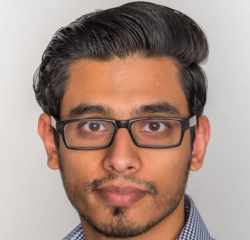
As well as expanding their horizons to the coastal vistas of Bournemouth, recent attendees to our BSEcho 2025 conference were able to develop their clinical and research capabilities thanks to the expertise of our speakers. Dr Awais Sheikh, Clinical Research Fellow (NAC) and Cardiology and General Internal Medicine Registrar (ST5) at the Royal Free London NHS Foundation Trust, elaborates on this topic.
I am thankful to the British Society of Echocardiography (BSE) for providing the bursary which enabled me to attend the BSEcho 2025 annual conference. I found it to be an outstanding opportunity to consolidate and extend my understanding of echocardiography, both from a clinical and a research perspective. As a cardiology registrar with a subspecialty interest in imaging, I found the meeting to be highly relevant, combining practical education with forward-looking discussion on innovation, service delivery and multidisciplinary collaboration.
Dr Emma Rees’ review of a year in echocardiography research was particularly engaging. Her ability to summarise and succinctly present key advancements over the course of the year was exceptional. She addressed the growing influence of artificial intelligence within echocardiography, illustrating how advanced image analysis and radiomic feature extraction are beginning to refine detection and differentiation of myocardial disease, which is a topic closely aligned to my research interests.
I found the session on physiologist-led services particularly thought-provoking. Talks from colleagues across the country showcased how advanced physiologists are expanding their clinical roles. Examples included physiologist-led TOE services and hypertrophic cardiomyopathy clinics run collaboratively with pharmacists and cardiologists. The session gave me a clearer appreciation of the operational and governance aspects of physiologist-led models, insight that will undoubtedly inform how I contribute to multidisciplinary team practice in the future.
Thirdly, the aortic regurgitation session provided a rich mix of science, guideline interpretation and practical cases. I found the case presentations particularly interesting, especially the demonstration of the role of 3D echocardiography in surgical decision-making. In the ‘Targeted echo for the future’ session, talks from Dr Elena Surkova and Dr Rebecca Dobson highlighted the importance of context-driven echocardiography, tailoring each study to answer specific clinical questions and address the value of targeted surveillance in complex patient groups.
A particular personal highlight was Dr Carol Whelan’s invited talk on cardiac amyloidosis, an area which forms the basis of my current academic research. Her presentation captured the remarkable progress made in the early recognition of cardiac amyloidosis, including how multimodal imaging techniques, including strain and extracellular volume mapping, have transformed patient pathways. It reinforced the fact that echocardiography remains the cornerstone of detection and follow-up in infiltrative cardiomyopathies.
The pulmonary hypertension session on the second day offered a very practical approach to right heart assessment. Talks by Dr Nina Karia and Dr Abdul Hameed consolidated the key haemodynamic concepts behind pulmonary pressure estimation, including the use of TR velocity and ancillary parameters to determine the echocardiographic probability of pulmonary hypertension, while emphasising the confirmatory role of right heart catheterisation. Dr Hebah Nashat’s presentation on pulmonary hypertension in congenital heart disease added further depth, illustrating the unique anatomical and physiological challenges of this subgroup and the need for tailored imaging and multidisciplinary collaboration. I found this session particularly valuable as it bridged physiology, imaging, and clinical decision-making in a way directly applicable to daily practice.
Beyond the educational content, what I valued most was the collegial atmosphere. The opportunity to engage with national experts, physiologists, and fellow trainees fostered a strong sense of community and shared purpose. I left the conference motivated to continue developing my imaging skills and to contribute to the next generation of echo-driven clinical research.