Abstract
The clinical utility of Transoesophageal Echocardiography (TOE) is well established, but the use of this modality has seen a significant increase in the UK with a growing cardiac structural interventional portfolio and the greater requirements for intraoperative use during cardiac surgery. According to the Spaulding Classification1, endo-cavity imaging probes can be classified as critical (in contact with sterile body cavities for e.g. laparoscopes) or semi-critical (in contact with mucous membranes e.g. TOE). A semi-critical probe does not require full sterilisation protocols, but the risk of cross-contamination must be diminished with high-level disinfection (HLD) methods. TOE operators should also be cognisant of the potential risks to staff from HLD products and also to the probe equipment. This document is an update of the BSE best practice guidance on probe decontamination first published in 20112. It must be used in tandem with the recommendations produced by the manufacturers and by local infection prevention teams within individual centres.
Introduction
Safety of all medical devices, including TOE, used in the UK is underpinned by the Medical Devices Regulation of 2002 and the Medical Devices Act of 2021. TOE probes do not warrant sterilisation, as they are not inserted into sterile cavities of the body like critical devices such as laparoscopes or surgical instruments. A TOE probe is classed as a semi-critical device that requires HLD. The bedrock of decontaminating a reusable semi-critical medical device is a) CLEANING at the point of use and b) HLD (either manual or automated) by trained personnel. NHS England published a Health Technical Memorandum in 2016 on decontamination of flexible endoscopes where recommendations for TOE probes were mentioned3. NHS Scotland have published a more focussed and up-to-date recommendation for TOE in their 2023 Health Technical Memorandum4. The Association of peri-Operative Registered Nurses (AORN) have recently updated their guidance on HLD for reusable semi-critical probes with particular emphasis on avoiding risk from disinfectants to patients and staff5 Finally, although there are fundamental structural and functional differences between TOE probes and upper gastrointestinal endoscopes, there is best practice guidance from The British Society of Gastroenterology6 that were revised in 2020 that have commonality relevant to TOE.
Transmission of infection following TOE
There is potential for cross-contamination of many bacteria and viruses but there is a sparsity of data on actual transmission of infections, particularly from the use of TOE in the out-patient setting. A retrospective study from Scotland found a greater risk of developing a positive microbiological culture in patients within 30 days of an out-patient TOE after adjusting for age and comorbidities (hazard risk of 4.92; 95% CI=3.17-7.63)7.
In the intra-operative setting however, there have been a number of reports of outbreaks of pathological micro-organisms following TOE. These include Candida parapsilosis sensu stricto8 Enterobacter cloacae9, Escherichia coli10, Legionella pneumophila11, multidrug-resistant Pseudomonas aeruginosa12, Salmonella enterica serotype Isangi13 and Serratia marcescens 14. Review of the outbreaks indicate common themes in deficiencies in the reprocessing of probes including15.
- using contaminated or inadequate concentrations of disinfectant
- inadequate inspection of TOE probes
- decontaminating TOE probes in the operating theatre between patients rather than in a dedicated disinfection area
- inadequate rinsing of TOE probes
- storing TOE probes inappropriately
Following one particular incident, the UK Medicines and Healthcare products Regulatory Agency (MHRA) released a Medical Device Alert in 201216 after the death of a patient from hepatitis B virus infection that may have been caused by the failure to appropriately disinfect a TOE probe between cases. Smoother the probe surface, easier the clean. However, repetitive use and aging causes natural wear on probe surfaces. Lee et al17 found that this favours the adhesion of microorganisms and residual organic substances (i.e. proteins, carbohydrates, haemoglobin) so checking the integrity of the TOE probe is another critical consideration for reducing cross-contamination.
Although there are no reports of transmission by TOE, below are a few micro-organisms that merit special mention because they pose a major threat to patients and a significant risk of cross-contamination. Some are resistant to commonly used disinfectants so choosing the correct process is crucial. Patients harbouring these infectious micro-organisms should be scheduled for the end of the TOE list to minimise cross-infection and a thorough clean of all surfaces in the procedure room is mandated.
- Mycobacteria, and especially waterborne mycobacteria (such as M. chelonae), are resistant to glutaraldehyde-based disinfectants.
- Bacterial spores (for e.g. from Clostridium difficile) can be isolated from endoscopes if glutaraldehyde disinfectants are diluted18 and therefore require sporicidal disinfectants e.g. hydrogen peroxide.
- Pathological prions are infectious particles and include those associated with Creutzfeldt Jakob disease (CJD) and variant CJD, are extremely resistant to standard decontamination procedures. Aldehyde disinfectants may anchor prion proteins on the probe making it more difficult to remove. Until 2015 a TOE probe used in a CJD patient had to be quarantined or destroyed. However, the UK Advisory Committee for Dangerous Pathogens revised its risk assumptions19) so no special precautions are required for TOE probes.
- Methycillin-resistant Staphylococcus Aureus (MRSA) and Carbapenemase-producing Enterobacteriaceae (CPE) are examples of bacteria that have developed resistance to many antibiotics and represent a major threat to life. These organisms are amenable to decontamination with hydrogen peroxide.
Local infection prevention and control colleagues are well versed to give advice in the planning of TOE in these scenarios. There may also be a facility to swab probes for these organisms following the HLD procedure prior to use on another patient.
Structural design of a TOE probe
All TOE probes, irrespective of the manufacturer, share the same components. The probe has a flexible tip, a shaft, a probe handle with steering controls and a cable which connects to a socket in its associated equipment (Figure 1).
 |
|
Figure 1. The components of a TOE probe
|
The TOE probe is flexible, reusable, delicate, expensive and heat sensitive. Because it is thermolabile, it cannot withstand the standard techniques of sterilisation utilising heat and steam. Moreover, the probes pose additional difficulties for the decontamination process as the probe handle and the electrical connections cannot be immersed in fluid.
Staff roles and responsibilities
Safety of TOE probes is not only the responsibility of all who have direct involvement with the procedure but also of the management and governance framework within the centre. It is imperative for departments to have close collaboration with the infection prevention and control teams for support and guidance. Hospitals should also have a nominated decontamination Lead who manages procurement, training, compliance with operational policies and audit. Designated medical engineers have a role in maintenance of equipment safety, keep a full list of probes along with training manuals for the specific decontamination requirements. Personnel undertaking decontamination should be able to demonstrate the required level of training and competence for their roles and responsibilities. A written decontamination standard operating procedure (SOP) for all TOE probes should be readily available for review and revised regularly. It is also important for staff to have close links with the TOE manufacturer’s applications teams so that new guidance about probe care is reflected and updated within the SOP. Any on-call staff doing emergency TOE should come under this governance umbrella and be provided with adequate access to decontamination equipment out of hours fortified by adequate training and competency.
Safe environment
Most elective TOEs are done in cardiac theatres, cardiac catheter laboratories or ward spaces such as endoscopy suites or cardiology wards. However, non-elective TOEs may occur remote from these designated areas. Ideally HLD should be undertaken in an area separate from where patient care activities are performed20. A decontamination facility should include a sink of adequate size for cleaning of the probe and storage for disinfection equipment. If a different area for HLD is not feasible, the room design should consider a dirty and clean area and respect the flow from used (dirty) through to storage (clean). Consideration must be given to the security of endoscopes throughout the decontamination process, including during transport and storage.
Trackability and traceability
Procedures should be in place for tracking and tracing all probes, all staff using them and all patients having procedures. Any equipment sent away for repairs or service should have a tracking record. Any loan equipment in the department should have the same. A record should be kept of all disinfection procedures used for each probe. All the disinfection manufacturers supply printable or electronic labels for filing in the patient records.
Protective probe sheaths and personal protection
TOE probes can be used with single-use sterile sheaths to reduce cross-contamination. However, like sterile gloves, sterile protective sheaths can fail, and therefore cannot be considered 100% reliable21. It is therefore recommended that probe cleaning and HLD is undertaken regardless of the use of a sheath.
Personal protective equipment (PPE) is mainly for staff protection and should be proportionate to the anticipated exposure to the risks either from the patient, the pathogen involved and any likely chemical contact. Basic PPE including aprons and gloves is used in all clinical procedures and TOE is no exception. Full PPE was advised during the Covid pandemic because TOE procedures were regarded as aerosol generating procedures. This high-level PPE was in addition to changes in the environment such as the use of negative pressure rooms with adequate air-changes. Full PPE (gown, gloves, fitted mask, hat and eye shield) may also be required if exposure to chemicals in anticipated during HLD.
High level disinfection
There are three steps to the HLD for TOE probes. These are summarised in the following flowchart. Steps 2 and 3 are repeated for every patient on a TOE list.
 |
|
Figure 2. The high level disinfection process
|
 |
|
Figure 3: Any part of the TOE probe can
be a source of contamination
|
Step 1: Point of use cleaning
Manual cleaning is used to remove readily detachable organic matter on the probe and best done immediately after the procedure at the point of use. If the procedure has been undertaken remote from the designated disinfection area, manual cleaning is mandated prior to transportation to prevent material drying on the probe and forming a biofilm. A biofilm is a mass of organisms that can adhere to the surface of the probe and can be difficult to remove22. If a single-use sheath is used for the TOE, then this should be discarded in a suitable clinical waste disposal unit. The probe should be carefully inspected to identify bite-marks or breaches on the probe surface. If the device appears damaged it should be removed from service, safety tested and repaired by the manufacturer.
Manual cleaning will then include wiping all areas of the probe including the electrical cable and plug-in unit with detergent-soaked single use lint-free cloths or sponges to ensure no visible residue remains. Only detergents specified by the probe manufacturer should be used and the correct dilution instructions must be followed. The probe handle and the electrical parts cannot be immersed in water but can be wiped clean. The probe is then rinsed with water and dried ready for disinfection. Figure 3 shows a contaminated electrical connector and underscores the need for high level decontamination of the entire probe, not just the parts in contact with the patient.
After cleaning, if HLD is delayed or remote from the point-of-use the device should be placed in a container that is leak-proof, resistant to punctures, large enough to accommodate the device, and securely labelled as contaminated. The manufacturer’s carry case must not be used for this purpose.
Step 2: High level disinfection
This process is designed to eradicate pathogenic micro-organisms such as the ones described above. This can be achieved using chemicals or by Ultraviolet-C (UV-C) light. There are three recommended HLD methods that are summarised in Table 1.
Table 1 compares methods generally used for HLD of TOE probes. The commercial products shown are only examples and not in order of preference.
| |
HLD wipes
|
HLD automated soakers
|
HLD using UV-C light
|
|
What does it look like?
Commercial equipment shown as representative examples only
|
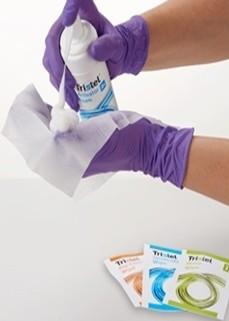
For e.g. Tristel® wipes
|
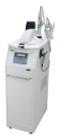
For e.g. Soluscope®
|

For e.g. Antigermix®
|
|
How does it work?
|
Trio of wipes, the main one impregnated with a chemical that turns into the sporicidal Chlorine Dioxide once activated
|
Probe shaft is designed to insert into the closed cabinet and cleaned by chemical vapours within the housing
|
Whole probe is designed to hang in the cupboard that exposes it to UV-C light sources within the cabinet
|
|
What are the advantages?
|
Easy to use
Easy to store
2-3 min cycle
|
Easy to use
Automated
Minimises chemical exposure
10-15 min cycle length
|
Easy to use
Automated
3 min cycle length
No chemical exposure
No rinsing required
No consumables
|
|
What are the disadvantages?
|
Manual so variable quality
Efficacy dependent on staff following instructions
Potential for chemical exposure during handling
Needs ventilated room with adequate air-exchange
Costs for consumables
|
Potential for chemical exposure during handling
Needs ventilated room with adequate air-exchanges
Needs sealed drainage
Rinsing required
Capital cost involved
Maintenance/service cost
Consumable costs
Space occupying
|
Space occupying
Capital cost involved
Maintenance/service cost
|
Disinfection using sporicidal wipes
This is a manual process to achieve high level disinfection with a series of impregnated wipes that separately clean, disinfect and then rinse all parts of the probes. The commonest wipes are impregnated with a chemical that turns into the sporicidal chemical Chlorine Dioxide once activated. These wipes are easy to use, quick to achieve disinfection and easy to store in procedure room cupboards. However, there is considerable subjectivity in this method so departments procuring this process should carefully consider effectiveness of the decontamination.
Disinfection using chemicals
The key to chemical disinfection for TOE is that the transducer steering mechanism is unsealed so can corrode and damage if chemicals enter it. In addition, as TOE probes are thermolabile, the disinfection must be performed at lower temperatures. Hence only Endoscope Washer Disinfectors (EWD) that are specifically designed for TOE can be used. A dedicated TOE EWD includes a closed cabinet fitted with an external device to hang the non-immersible probe handle and electrical parts outside the cabinet. The probe handle, cable and connector must be cleaned by other means beforehand.
The safe use of the chemicals in the UK is regulated by the Control of Substances Hazardous to Health Regulations (COSHH). All products procured must either be CE-marked (if pre-June 2023) or UKCA marked (if post-June 2023) for use in the UK. Chemicals commonly used in TOE EWDs are ortho-Phthaladehyde, Hydrogen Peroxide, Enzymatic disinfectants and Peracetic acid. All chemicals used must be compatible with the TOE probe manufacturer’s recommendation and used according to the chemical manufacturer’s instructions. A rinse cycle is usually required to remove chemical residue from the probe.
Employers are required by law to do everything that is reasonably practical to protect the health of their workers. Chemical exposure can lead to health problems such as headaches, ocular irritation, nasal irritation, contact dermatitis, occupational asthma and allergic reactions23. Staff are not only at risk of exposure when directly handling the chemicals but also when the disinfectant solution is discharged to a drain. Sealing is therefore required at various points of the process as well as adequate ventilation in the room and adequate PPE in line with local risk assessments. To keep exposure to a minimum, automated EDWs are recommended over manual EDWs. Automated systems also remove the subjectivity that is inevitable in a HLD process.
Disinfection using Ultraviolet-C (UV-C)
This is an automated process to achieve high level disinfection of probes in a sealed chamber by exposure to ultraviolet C light. There are no chemicals or rinsing involved and the turnaround cycle is rapid. The whole probe can have HLD with this method without risk to staff or equipment. This is the only option that does not require a room with adequate ventilation and can be housed in the TOE room itself. This method is therefore preferred for HLD but the capital costs can be prohibitive to departments.
Step 3: Storage and transportation
TOE probes should be stored vertically in a clean, ventilated and dust-free cabinet, away from extremes of temperature or direct sunlight. Multiple disinfected probes can be stored together in the same cabinet. Storage in a carry case or tray can distort the shaft and harm the probe beyond 2-3 days. Probes should be disinfected prior to the first use of the day, between patients and following the last patient of the day regardless of the method of storage.
If a TOE probe needs transportation to a dedicated decontamination area, it must be cleaned at the point of use (step 2) and placed into a solid tray (for e.g. endoscope tray) clearly marked as contaminated. Trays do not need to be sterile but should be visibly clean. The use of a tray liner and cover system may be beneficial particularly in transporting the probes, for example, using a green = clean and red = contaminated cover. The probe carry case is not suitable for contaminated probes so should only be used for transportation after an HLD process.
Conclusions
This document proposes a working solution to disinfection that can be implemented in Cardiology and Cardiac surgical Departments. The information provided represents a consensus on HLD with a focus on health and safety of staff and patients. There are effectively three procedures described- a manual, wipe-based system, an automated washer using chemicals and an automated system using Ultraviolet-C light. The automated systems require capital investment but are less subjective and therefore more effective. The UV-C cabinet is the preferred option because it decontaminates the whole probe with a rapid cycle without exposing staff or equipment to chemicals. Correct application of all processes is important not only for patient care but also to ensure staff safety. Incorrect use of HLD can be harmful to the equipment and therefore contravene the manufacturer’s warranty. Effective decontamination is the responsibility of the whole department and should fall within an appropriate clinical governance framework.
BSE Council and Trustees June 2025, with thanks to Dr Anita MacNab, Consultant Cardiologist, Manchester University NHS Foundation Trust and Mr Rob Warburton, Decontamination Lead, Manchester University NHS Foundation Trust
References
- Spaulding EH. Chemical disinfection of medical and surgical materials. In: Lawrence C, Block SS, editors. Disinfection, sterilization, and preservation. Philadelphia (PA): Lea & Febiger; 1968. p. 517–31.
- British Society of Echocardiography. TOE decontamination protocol [Internet]. London: BSE; [cited 2025 Jun 19]. Available from: https://bsecho.org/common/Uploaded%20files/Education/Protocols%20and%20guidelines/TOE%20decontamination.pdf
- NHS England. Health Technical Memorandum 01-06: Decontamination of flexible endoscopes. Part C: Operational management [Internet]. London: NHS England; 2021 [cited 2025 Jun 19]. Available from: https://www.england.nhs.uk/wp-content/uploads/2021/05/HTM0106_PartC.pdf
- NHS Scotland. Scottish Health Technical Memorandum 01-06: Decontamination of flexible endoscopes. Part A: Policy and management [Internet]. Edinburgh: NHS National Services Scotland; 2023 [cited 2025 Jun 19]. Available from: https://www.nss.nhs.scot/media/4140/shtm-01-06-part-a-v1-mar-2023.pdf
- Association of periOperative Registered Nurses. Revised guideline for manual high-level disinfection [Internet]. Denver (CO): AORN; [cited 2025 Jun 19]. Available from: https://www.aorn.org/article/revised-guideline-for-manual-high-level-disinfection
- British Society of Gastroenterology. BSG decontamination guidance update 2020 [Internet]. London: BSG; 2020 [cited 2025 Jun 19]. Available from: https://www.bsg.org.uk/getattachment/33800384-054e-4109-a015-788a09402bf7/BSG-Decontamination-guidance-2020-update.pdf
- Scott D, Fletcher E, Kane H, et al. Risk of infection following semi-invasive ultrasound procedures in Scotland, 2010 to 2016: a retrospective cohort study using linked national datasets. Ultrasound. 2018;26(3):168–77. doi:10.1177/1742271X18774594
- Qi L, Fan W, Xia X, et al. Nosocomial outbreak of Candida parapsilosis sensu stricto fungaemia in a neonatal intensive care unit in China. J Hosp Infect. 2018 Dec;100(4):e246–52.
- Kanemitsu K, Endo S, Oda K, et al. An increased incidence of Enterobacter cloacae in a cardiovascular ward. J Hosp Infect. 2007 Jun;66(2):130–4.
- Bancroft EA, English L, Terashita D, et al. Outbreak of Escherichia coli infections associated with a contaminated transesophageal echocardiography probe. Infect Control Hosp Epidemiol. 2013;34(10):1121–3.
- Levy PY, Teysseire N, Etienne J, et al. A nosocomial outbreak of Legionella pneumophila caused by contaminated transesophageal echocardiography probes. Infect Control Hosp Epidemiol. 2003;24(8):619–22.
- Seki M, Machida N, Yamagishi Y, et al. Nosocomial outbreak of multidrug-resistant Pseudomonas aeruginosa caused by damaged transesophageal echocardiogram probe used in cardiovascular surgical operations. J Infect Chemother. 2013;19(4):677–81.
- Suleyman G, Tibbetts R, Perri MB, et al. Nosocomial outbreak of a novel extended-spectrum β-lactamase Salmonella enterica serotype Isangi among surgical patients. Infect Control Hosp Epidemiol. 2016;37(8):954–61.
- Vetter L, Schuepfer G, Kuster SP, et al. A hospital-wide outbreak of Serratia marcescens, and Ishikawa’s “fishbone” analysis to support outbreak control. Qual Manag Health Care. 2016;25(1):1–7.
- de Souza Hajar K, Quartim de Moraes Bruna C, et al. Infection transmission associated with contaminated ultrasound probes: a systematic review. AORN J. 2022 Jan;115(1):42–51.
- Medicines and Healthcare products Regulatory Agency. Medical device alert: reusable transoesophageal echocardiography, transvaginal and transrectal ultrasound probes (transducers) (MDA/2012/037) [Internet]. London: MHRA; 2012 [cited 2025 Jun 19]. Available from: https://assets.digital.cabinet-office.gov.uk/media/5485abf1ed915d4c0d000261/con160567.pdf
- Lee DH, Kim DB, Kim HY, et al. Increasing potential risks of contamination from repetitive use of endoscope. Am J Infect Control. 2015 May;43(5):e13–7.
- Rutala WA, Gergen MF, Weber DJ. Inactivation of Clostridium difficile spores by disinfectants. Infect Control Hosp Epidemiol. 1993 Jan;14(1):36–9.
- Advisory Committee on Dangerous Pathogens. Transmissible spongiform encephalopathy agents: safe working and the prevention of infection – Annex F [Internet]. London: UK Health Security Agency; 2015 [cited 2025 Jun 19]. Available from: https://www.gov.uk/government/uploads/system/uploads/attachment_data/file/470292/ACDP_TSE_Annex_F_Oct_2015.pdf
- Guideline for manual high-level disinfection. In: Guidelines for perioperative practice. Denver (CO): AORN, Inc; 2024. p. 315–38.
- Rutala WA, Weber DJ; Healthcare Infection Control Practices Advisory Committee (HICPAC). Guideline for disinfection and sterilization in healthcare facilities, 2008. Washington (DC): Centers for Disease Control and Prevention; 2008.
- Association for the Advancement of Medical Instrumentation. ANSI/AAMI ST58:2013 – Chemical sterilization and high-level disinfection in health care facilities. Arlington (VA): AAMI; 2013.
- Guideline for manual chemical high-level disinfection. In: Guidelines for perioperative practice. Denver (CO): AORN, Inc; 2018. p. 883–906.